
How Does Art Therapy Promote Resilience And Coping Mechanisms Within Families?
Harnessing the Power of Art Therapy to Resolve Family Conflicts
Art therapy has emerged as a powerful tool in the realm of psychology, offering a unique avenue for individuals and families to explore and address deep-seated issues. One particularly intriguing application of art therapy lies in its ability to contribute to the resolution of family conflicts. The question at hand is: How can art therapy be utilized to address and resolve family conflicts? Contact: Creative Sanctuary Family conflicts are an inevitable part of life, stemming from diverse sources such as communication breakdowns, differing perspectives, and unresolved emotions. Art therapy provides a creative and non-verbal medium for family members to express themselves, fostering understanding and collaboration. By engaging in artistic activities, individuals can tap into their subconscious, unveiling emotions that may be difficult to articulate verbally. The visual nature of art allows family members to externalize their internal struggles, making them tangible and easier to navigate. Through the creation of art, each family member can communicate their thoughts and feelings without the constraints of traditional dialogue. This process not only encourages self-expression but also invites empathy and understanding from others within the family unit.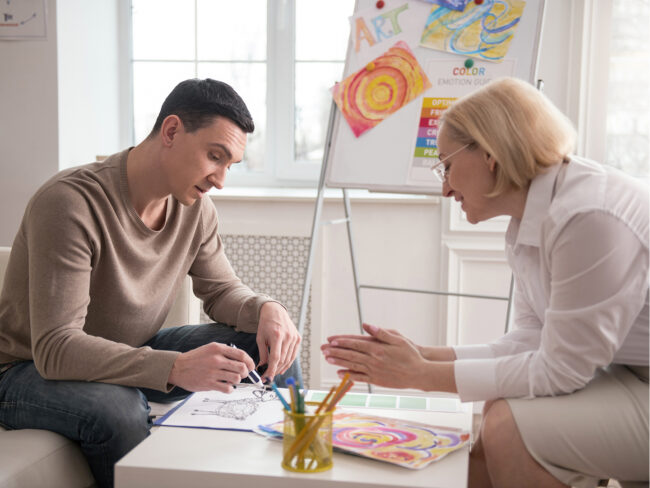 One key aspect of art therapy in resolving family conflicts is the emphasis on the process rather than the final product. It's not about creating a masterpiece but about the journey of self-discovery and mutual exploration. Families can engage in collaborative art projects, fostering a sense of unity and shared purpose. These shared creative experiences can lead to a deeper connection and a newfound appreciation for each other's perspectives.
Art therapy also provides a safe space for family members to explore alternative solutions to their conflicts. By working together on a creative project, individuals can identify common goals and develop strategies for addressing challenges collaboratively. This shared problem-solving experience can be transformative, promoting a sense of agency and empowerment within the family.
Moreover, art therapy facilitates emotional regulation, a crucial skill in navigating family conflicts. Through artistic expression, individuals can release pent-up emotions and develop healthier coping mechanisms. This emotional release paves the way for more constructive communication within the family, reducing the likelihood of conflicts escalating.
Research in the field of psychology supports the efficacy of art therapy in family settings. Studies have shown that incorporating art into family counseling can lead to improved communication, increased emotional intelligence, and enhanced overall well-being for family members. The visual and tactile aspects of art engage different areas of the brain, complementing traditional talk therapy approaches.
One key aspect of art therapy in resolving family conflicts is the emphasis on the process rather than the final product. It's not about creating a masterpiece but about the journey of self-discovery and mutual exploration. Families can engage in collaborative art projects, fostering a sense of unity and shared purpose. These shared creative experiences can lead to a deeper connection and a newfound appreciation for each other's perspectives.
Art therapy also provides a safe space for family members to explore alternative solutions to their conflicts. By working together on a creative project, individuals can identify common goals and develop strategies for addressing challenges collaboratively. This shared problem-solving experience can be transformative, promoting a sense of agency and empowerment within the family.
Moreover, art therapy facilitates emotional regulation, a crucial skill in navigating family conflicts. Through artistic expression, individuals can release pent-up emotions and develop healthier coping mechanisms. This emotional release paves the way for more constructive communication within the family, reducing the likelihood of conflicts escalating.
Research in the field of psychology supports the efficacy of art therapy in family settings. Studies have shown that incorporating art into family counseling can lead to improved communication, increased emotional intelligence, and enhanced overall well-being for family members. The visual and tactile aspects of art engage different areas of the brain, complementing traditional talk therapy approaches.